
Why Your QA Team Hates Your "Move Fast and Break Things" Culture
A CTO's wake-up call on how Silicon Valley's favorite mantra became QA's nightmare—and why your bottom line is paying the price.
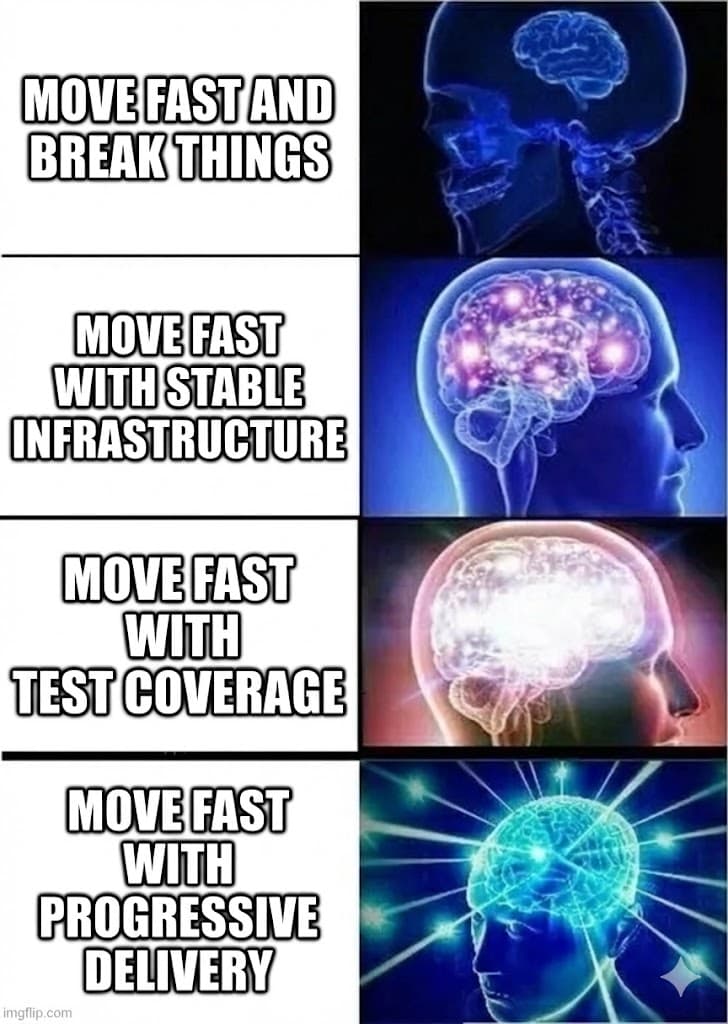
The Mantra That Aged Like Milk
Remember when Zuckerberg's "Move fast and break things" was plastered on every startup's wall? In 2009, Facebook had 200 million users and was building a social network. In 2026, you're building enterprise B2B SaaS with compliance requirements, SLAs, and customers who will churn the moment your authentication breaks at 2 AM on a Saturday.
Here's the uncomfortable truth your board isn't telling you: Facebook removed that poster in 2014. They replaced it with "Move fast with stable infrastructure." Meanwhile, you're still running sprints like it's 2009, wondering why your customer support costs are eating your margins and your QA lead just put in their two-week notice.
The Real Cost of "Broken Things" (In Actual Dollars)
Let's talk numbers, because that's what gets CFO attention. When you ship a bug to production, here's the actual P&L impact:
- Immediate support load: Your support team gets slammed. Average enterprise support ticket costs $15-25 to handle. A bad deployment generating 200 tickets? That's $3,000-5,000 in direct support costs.
- Engineering interrupt cost: Your $150k/year senior engineers stop feature work to firefight. If 3 engineers spend 2 days on a hotfix, that's roughly $3,600 in opportunity cost (not counting context switching penalties).
- Customer churn risk: IBM found that 55% of users abandon apps after a single bad experience. If your bug affects 10% of users and causes 2% churn on a $100k ACV customer base? You just lost $200k ARR.
- Reputation damage: Your NPS score drops. Trust erodes. Sales cycles lengthen. This is the silent killer—impossible to measure directly but devastating over quarters.
Now let's compare that to the cost of catching the bug pre-production: A QA engineer running your test suite costs maybe $300/day (loaded cost). A comprehensive test cycle takes 1-2 days. You're looking at $600 to prevent a $10,000+ incident.
The ROI isn't just good—it's embarrassingly obvious. Yet here you are, cutting QA headcount to "move faster."
Why This Worked for Facebook (And Fails for You)
Facebook could afford to break things in 2009 because:
- Free consumer product: Users weren't paying. A bug meant annoyance, not breach of contract.
- Network effects lock-in: Where else would users go? MySpace? They had monopolistic retention.
- No compliance burden: GDPR didn't exist. SOC 2 wasn't required. PCI-DSS wasn't in their stack.
- Experimentation culture: The entire company was optimized for A/B testing and rapid rollback. You have neither the infrastructure nor the organizational muscle memory.
Your reality is different. You have:
- Paying enterprise customers with contracts, SLAs, and legal teams
- Competitive markets where switching costs are low and alternatives abundant
- Regulatory requirements where "breaking things" means audit failures and potential fines
- Complex technical stacks with microservices, third-party integrations, and legacy code that wasn't designed for rapid iteration
Trying to apply Facebook 2009 playbooks to your 2026 B2B SaaS is like trying to drive a Porsche using motorcycle controls. The physics are fundamentally different.
The Hidden Burnout Tax
Here's what your QA team won't say in retrospectives but tells recruiters during interviews:
"Every sprint, we raise bugs. Every sprint, PM says we don't have time to fix them—ship anyway. Then we spend the next sprint firefighting production issues instead of building the test infrastructure we desperately need. I'm tired of being the only person who cares about quality while watching my warnings become SEV-1 incidents."
This is the death spiral of velocity-first culture:
- You skip testing to ship faster
- Bugs escape to production
- Engineering firefights instead of building features
- You fall behind roadmap commitments
- Pressure increases to ship even faster (back to step 1)
Meanwhile, your QA team—the people who actually understand system reliability—become demoralized. The good ones leave. The remaining ones stop fighting battles they can't win. You're left with a rubber-stamp QA process that gives you the illusion of quality without any actual coverage.
Congratulations: you're now moving fast and breaking things, with nobody left who can tell you what's about to explode.
Building a Testing Culture That Enables Real Speed
Here's the paradox: companies that invest in quality actually ship faster over time. Google, Amazon, Netflix—these aren't slow-moving enterprises. They're deployment machines that release hundreds of times per day. The difference? They built testing infrastructure that makes speed safe.
If you're serious about velocity without chaos, here's the actual playbook:
1. Treat Test Infrastructure as a Product Investment
Stop treating testing as "extra work after development." Allocate 20-30% of engineering time to test infrastructure, automation frameworks, and CI/CD reliability. This isn't overhead—it's the foundation that makes fast shipping possible.
Practical implementation:
// Example: Testing infrastructure as code
// .github/workflows/quality-gate.yml

name: Quality Gate
on: [pull_request]

jobs:
  test:
    runs-on: ubuntu-latest
    steps:
      - uses: actions/checkout@v3

      - name: Run unit tests
        run: npm test -- --coverage

      - name: Coverage threshold check
        run: |
          if [ "$(jq '.total.lines.pct' coverage/coverage-summary.json)" < 80 ]; then
            echo "Coverage below 80% threshold"
            exit 1
          fi

      - name: Run integration tests
        run: npm run test:integration

      - name: Run visual regression tests
        run: npm run test:visual

      - name: Security audit
        run: npm audit --audit-level=moderate

      - name: Bundle size check
        run: |
          npm run build
          if [ $(stat -f%z dist/bundle.js) -gt 500000 ]; then
            echo "Bundle size exceeds 500KB limit"
            exit 1
          fi

# Block merge if ANY check fails
# No exceptions, no "we'll fix it later"
2. Define "Done" to Include Quality Metrics
A feature isn't done when code is written. It's done when:
- Unit tests exist with >80% coverage on new code
- Integration tests cover critical user paths
- Performance benchmarks pass (no regressions)
- Security scan shows no critical vulnerabilities
- Documentation is updated
- QA has signed off on acceptance criteria
This sounds like bureaucracy until you realize Google's deployment rate increased when they enforced these standards. Why? Because they stopped shipping landmines that exploded later.
3. Implement Progressive Delivery (Not Cowboy Deploys)
"Move fast" doesn't mean "YOLO to production." It means deploy frequently with safety rails:
// Example: Feature flag with gradual rollout
import { LaunchDarkly } from '@launchdarkly/node-server-sdk';

class FeatureService {
  async rolloutNewCheckout(userId: string): Promise<boolean> {
    const ldClient = await LaunchDarkly.init(process.env.LD_SDK_KEY);

    // Start with 5% internal users
    // Then 20% general users
    // Then 50% if metrics look good
    // Then 100% after 24 hours of stability
    const useNewCheckout = await ldClient.variation(
      'new-checkout-flow',
      { key: userId },
      false // Safe default
    );

    // Monitor these metrics in real-time
    if (useNewCheckout) {
      this.trackMetrics({
        errorRate: 'checkout.errors',
        latencyP95: 'checkout.latency.p95',
        conversionRate: 'checkout.conversion',
        supportTickets: 'checkout.support_volume'
      });

      // Auto-rollback if any metric degrades >10%
      this.enableAutoRollback('new-checkout-flow', {
        errorRateThreshold: 0.01,
        latencyThreshold: 2000,
        conversionDropThreshold: 0.1
      });
    }

    return useNewCheckout;
  }
}
With this approach, you're shipping multiple times per day—but with guardrails that catch issues before they become disasters.
4. Make QA a Partnership, Not a Bottleneck
Your QA team shouldn't be gatekeepers at the end of the pipeline. They should be embedded in squads from day one, helping engineers write better tests, identifying risk areas early, and building automation that makes everyone faster.
Shift the conversation from:
- Old model: "QA is blocking our release, we need to ship faster"
- New model: "QA identified this risk early, let's write an automated test so we never regress"
When QA is a partner, velocity increases because you're catching issues in minutes (local tests) instead of days (production debugging).
The Bottom Line: Speed vs. Velocity
Here's the distinction most CTOs miss:
- Speed = How fast you ship code
- Velocity = How fast you deliver customer value
You can have high speed and negative velocity if every release introduces bugs that require hotfixes, support escalations, and trust erosion. You're running fast on a treadmill—lots of motion, zero progress.
Real velocity comes from sustainable shipping: consistent releases that compound value over time without accumulating technical debt or burning out your team.
So the next time someone quotes "move fast and break things" in your leadership meeting, ask them:
- What's our current cost-per-production-bug?
- How many sprints are we spending on firefighting vs. roadmap work?
- What's our QA team turnover rate compared to engineering overall?
- Can we afford another customer-impacting outage this quarter?
The answers might make you rethink which posters you hang in the office.
Ready to Build Quality into Your Culture?
At Desplega.ai, we help engineering leaders implement testing infrastructure that enables real velocity—fast shipping without the chaos. From automated regression testing to progressive delivery pipelines, we build the safety nets that let you move fast sustainably.
Want to calculate the ROI of investing in quality? Let's talk. We'll analyze your current deployment costs and show you what's possible when testing becomes a competitive advantage, not a bottleneck.
Because the best way to move fast is to stop breaking things your customers actually paid for.